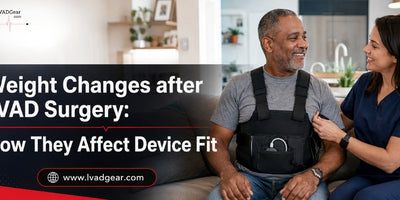
Weight Changes after LVAD Surgery: How They Affect Device Fit
After LVAD surgery, it is common for many patients to experience weight changes, which is completely normal. Your body experiences major changes after the surgery, as your heart function improves, and those changes often show up on the scale. In fact research shows that most LVAD patients experience positive weight changes in the first six months, but they gain weight in the long term.
As your weight changes, you may see that your controller, batteries, and clothing may no longer fit the way they used to. A device that once fit comfortably can suddenly feel loose or tight. Proper device fit matters for more than comfort alone. It protects your device while supporting you during physical activity. Let’s talk about why weight changes happen, how they affect your equipment, and what you can do to keep your device fit throughout your recovery process.
Why Does Weight Change after LVAD Surgery?
Before adapting ways to manage weight, we must talk about why weight changes occur after LVAD surgery. Understanding weight changes during recovery will help you make effective lifestyle modifications.
Several factors act simultaneously to affect your body weight after surgery. When heart function is improved, it brings back your appetite. Many patients lose weight initially after the surgery, as their body releases fluid that builds up due to insufficient heart pumping. As you begin to recover, muscle gain during cardiac rehabilitation adds healthy weight back. The weight also changes according to your physical activity or whether you move more or less than before. In some cases, medications can affect your appetite, fluid retention, and metabolism, which are linked to weight gain or weight loss.
Common Weight Changes LVAD Patients Experience
Many patients lose weight for reasons connected directly to their recovery. Some of the most common causes of weight loss include:
-
Loss of excess fluid that built up before surgery
-
Reduced swelling throughout the body
-
Muscle loss during the early recovery period
-
Changes in overall body composition as your body heals
Other patients gain weight as their health improves. This often happens because of:
-
Improved nutrition and a stronger appetite
-
Increased muscle mass from rehabilitation and exercise
-
Fluid retention, which can sometimes signal a concern worth discussing with your care team
-
Reduced physical activity during certain stages of recovery
How Weight Changes Affect LVAD Device Fit
Weight changes can affect the way your device fits in the following ways:
Controller Position
Your controller needs a stable position to work well throughout the day. When your weight changes, loose-fitting clothing can allow the controller to shift around more than it should. This movement creates pressure points against your skin and makes it harder to reach your controller quickly when you need it. Maintaining easy access to your controller matters every day, so your clothing needs to adjust alongside your body.
Battery Placement
Your batteries also depend on a proper fit to stay secure. A belt that once fit snugly can loosen as you lose weight, or feel tight and uncomfortable as you gain it. LVAD Vest and shirt pockets face the same challenge, since they need to hold your batteries close to your body without shifting. Poor weight distribution puts extra strain on your shoulders, and it also increases the movement of batteries during daily activities.
Driveline Management
Weight changes can also affect how your driveline sits against your body. Significant weight loss sometimes creates more slack in the driveline, while weight gain can add tension that was not there before. Both situations can affect the positioning of your driveline, which raises the risk of accidental pulling if your clothing doesn't hold the driveline securely in place.
Why Proper Device Fit Matters
A properly fitted device supports several important parts of your daily life. It keeps you comfortable throughout the day. LVAD equipment that rubs against your skin can be very uncomfortable, so a proper device fit offers stability and keeps your controller and batteries where they belong instead of shifting with movement.
A good fit protects your driveline from accidental tugging, and it supports better mobility, since you move more freely when your equipment doesn't restrict or irritate you. A secure fit also reduces the risk of accidental disconnection, which keeps your device working the way it should. One of the important things is to be independent in performing activities, which is possible when your device fits right in your LVAD gear.
Choosing Adjustable LVAD Clothing during Recovery
While you are going through your recovery phase, it is important to have the right support in the form of LVAD clothing so that you have secure, dedicated pockets to keep your device protected. Since your body may keep changing throughout recovery, having some flexibility in your clothing lets you stay comfortable. Look for these features when you choose new LVAD clothing:
-
Stretchable fabrics that move with your body
-
Reinforced controller pockets that hold their shape over time
-
Secure battery compartments that prevent shifting
-
Moisture-wicking materials that keep you dry and comfortable
-
Breathable construction that works well for extended daily wear
-
Soft seams around the driveline that reduce friction and irritation
Tips for Maintaining a Comfortable Device Fit
You can stay ahead of fit problems with a few simple habits. Here are some of the tips that can prove effective to keep the device fit:
-
Monitor your weight regularly so you notice changes before they cause real discomfort.
-
Check the position of your controller to catch if it shifts while you move or causes discomfort.
-
Adjust belts and straps as needed rather than waiting for them to feel wrong.
-
Inspect your driveline routing often to make sure it sits securely without unnecessary tension.
-
Wearing the correct clothing size makes a bigger difference than many patients expect, so avoid sizing up or down out of habit once your body changes.
-
Wear LVAD-specific clothing and accessories like an LVAD sleeping belt or LVAD shorts in the right fit.
-
Rotating your clothing can help you adapt gradually instead of waiting until one outfit no longer works at all.
Healthy Weight Management after LVAD Surgery
Managing your weight well supports both your health and your device fit. Follow your nutrition plan closely, since your care team designs it around your specific recovery needs. Stay physically active within the limits your team recommends, especially in the initial phases of recovery. Attend cardiac rehabilitation sessions consistently, as it directly helps build healthy muscle and improve your overall strength.
Monitor fluid retention closely, since sudden swelling can be a sign of a problem that needs medical attention. Keep your follow-up appointments, even when you feel well. Speak with your healthcare team before major weight changes, whether you are planning a new diet or a significant increase in activity.
How Your Healthcare Team Can Help
Several members of your care team can support you through weight changes and device fit concerns. Here is how a multidisciplinary approach can help manage weight:
-
Your LVAD coordinator helps you manage equipment fit and day-to-day concerns.
-
Your cardiologist monitors your heart function and overall health as your weight shifts.
-
A registered dietitian can guide your nutrition plan to support healthy, steady weight management.
-
A cardiac rehabilitation specialist helps you build strength safely
-
A physical therapist supports your mobility and movement as your body changes throughout recovery.
Finding the Right LVAD Gear as Your Body Changes
As you see body weight changes during your recovery phase, it is important to choose the right fit LVAD gear. Here is what you can do:
-
Finding gear that fits well starts with choosing the correct size for your current body, not the size you wore before surgery or the size you hope to reach.
-
Adjustable options give you room to grow or shrink without needing an entirely new wardrobe every few months.
-
Measuring for the best fit takes a little extra time, but it pays off in daily comfort.
-
Prioritizing comfort and accessibility over style alone helps you stay consistent with wearing your equipment properly.
Choosing gear built for supporting long-term daily wear means you won't need to replace it as often as your body continues to adjust.
Final Thoughts
Weight changes are a normal part of recovery for many LVAD patients, but they can affect how comfortably and securely your device is worn. Regularly checking the fit of your controller, batteries, and clothing helps improve comfort, reduce driveline strain, and support safe daily activities. If you notice rapid weight changes or your equipment no longer fits properly, discuss both your health and your gear with your LVAD care team.
Frequently Asked Questions (FAQs)
Is it normal to lose weight after LVAD surgery?
Yes, many patients lose weight in the early recovery period as excess fluid leaves the body and swelling goes down.
Can weight gain affect how my LVAD controller fits?
Yes, weight gain can change how your clothing sits, which affects controller position and access.
How do I know if my LVAD clothing is too loose or too tight?
Watch for shifting equipment, visible pressure points, or difficulty securing your controller and batteries in place.
Should I replace my LVAD shirt after significant weight loss?
In many cases, yes, especially if your current clothing no longer holds your equipment securely.
What type of LVAD clothing works best during recovery?
Adjustable clothing with stretch fabric, reinforced pockets, and secure battery compartments works well during periods of changing weight.
When should I report sudden weight gain to my healthcare provider?
Report sudden or rapid weight gain right away, since it can sometimes signal fluid retention that needs medical attention.
Next post
LVAD Alarms Explained: What Every Patient Should Know
Updated on 11 August 2026